Grants
Advanced Characterization of Reclaimed Fly Ash for Transportation Construction, Federal Highway Administration (FHWA), 2019-2023, PI: Tyler Ley, Co-PI: Paul J. Tikalsky and Guoliang Fan
Summary: Fly ash
is a waste product and tools do not exist to measure the consistency and
predict the performance in concrete. We need new tools that predict fly
ash performance in concrete. This project is seeking
advanced machine
learning approaches to characterize different
categories
of fly ash in
terms of their specific contribution to the strength,
resistivity
 and
diffusion properties
of the concrete by
using a small set of training samples collected by various experiments
under different conditions. The goal of this project is to develop a
user-friendly tool for transportation construction that is
able classify a
new kind of fly ash by analyzing its chemicals and other conditions.
and
diffusion properties
of the concrete by
using a small set of training samples collected by various experiments
under different conditions. The goal of this project is to develop a
user-friendly tool for transportation construction that is
able classify a
new kind of fly ash by analyzing its chemicals and other conditions.
(Courtesy: Dr. Tyler Ley)
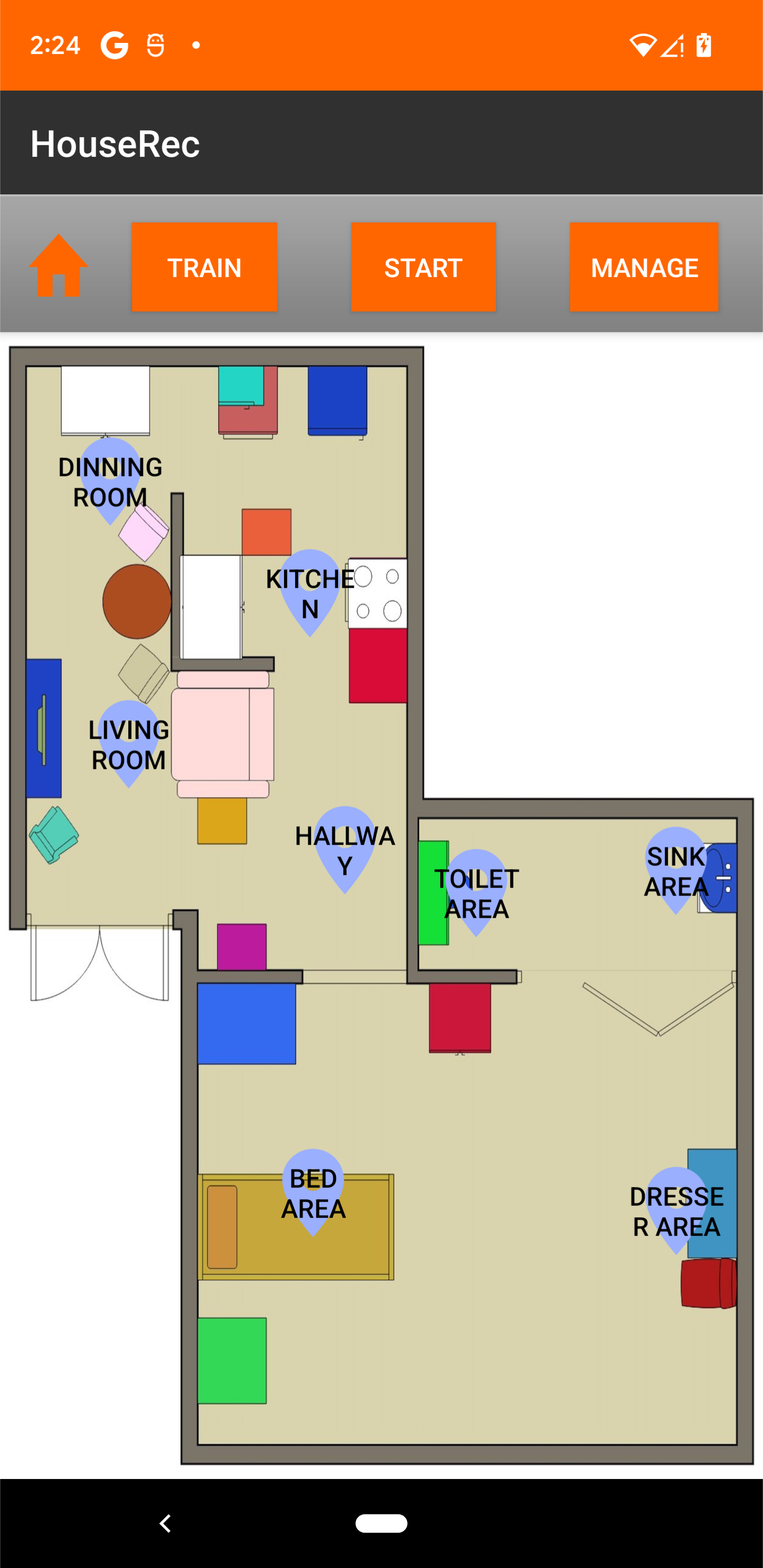
CATcare: Cognition Assistive Technology for Dementia Homecare, National Institutes of Health (NIH), 2019-2023, PI: Guoliang Fan and Co-PI: Emily Roberts
Summary: Family
members with a relative with Alzheimer’s disease and other forms of
dementia often face complex, and stressful life situations that many
other caregivers do not. Multiple factors make the adjustment to the
caregiving role particularly hard, as the caregiver balances this role
with other demands, including child rearing, careers, and relationships.
For people with Alzheimer’s diseases and other forms of dementia,
perceptible capabilities, fundamental information-processing
capabilities and previously acquired knowledge is generally
 limited,
making it difficult to distinguish relevant information from irrelevant
information. Tasks such as making breakfast or teeth brushing may become
too difficult to complete independently and an inability to remember
events that occurred only a few days, hours, or even minutes previously
makes day-to-day decision-making and navigating built environments
difficult. The recall of routes and tasks may be unpredictable,
therefore caregivers are often left with the constant and repetitive
responsibility of prompting
and cueing the care recipient, leading additional stress
in their caregiving role. This project aims to develop a low-cost
wearable device to improve the quality and
sustainability
of Alzheimer’s disease
and other dementia homecare that is beneficial to both
care recipients and caregivers, and potentially create a new
paradigm to provide assistance and care to individuals in a home
environment.
limited,
making it difficult to distinguish relevant information from irrelevant
information. Tasks such as making breakfast or teeth brushing may become
too difficult to complete independently and an inability to remember
events that occurred only a few days, hours, or even minutes previously
makes day-to-day decision-making and navigating built environments
difficult. The recall of routes and tasks may be unpredictable,
therefore caregivers are often left with the constant and repetitive
responsibility of prompting
and cueing the care recipient, leading additional stress
in their caregiving role. This project aims to develop a low-cost
wearable device to improve the quality and
sustainability
of Alzheimer’s disease
and other dementia homecare that is beneficial to both
care recipients and caregivers, and potentially create a new
paradigm to provide assistance and care to individuals in a home
environment.
A Mobile Platform for Clinical Gait Analysis, OCAST Health Research Program, 2018-2021, PI: Guoliang Fan
Summary: This project seeks an innovative approach to develop a mobile
platform for low-cost clinical gait analysis, which can (1) autonomously
follow a walking subject in a free and natural setting and from three
different perspectives; (2) reliably estimate full-body gait kinematics
represented by skeletal joint angles and points from depth sequences
under different perspectives, (3) robustly extract relevant
biomechanical parameters for gait imbalance assessment. The proposed
system is targeted on the limitation and constraints of the current motion
capture (Mocap) systems, including “gold standard” optical Mocap
systems,
visi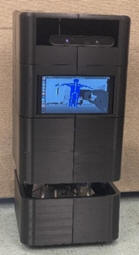 on-based gait analysis tools, pressure sensor mats and wearable
sensor networks.
On the one hand,
the proposed
system is designed to minimize the
interference and constraints to the subject’s motion pattern, and
at mean time, to maximize the subject’s walking
space and freedom and to support multi-view
motion capture. On the other
hand, the system is economical (under $2,000 hardware), portable and
fully integrated with a small footprint. The proposed mobile
Mocap system has a great potential to be applied for many motion-related
clinical applications, balance assessment, gait disorder analysis,
physical therapy and musculoskeletal surgery rehabilitation.
on-based gait analysis tools, pressure sensor mats and wearable
sensor networks.
On the one hand,
the proposed
system is designed to minimize the
interference and constraints to the subject’s motion pattern, and
at mean time, to maximize the subject’s walking
space and freedom and to support multi-view
motion capture. On the other
hand, the system is economical (under $2,000 hardware), portable and
fully integrated with a small footprint. The proposed mobile
Mocap system has a great potential to be applied for many motion-related
clinical applications, balance assessment, gait disorder analysis,
physical therapy and musculoskeletal surgery rehabilitation.
NRI: Considerate Co-robot Intelligence through Ubiquitous Human State Awareness, National Science Foundation, National Robotics Initiative (NRI), 2014-2017, PI: Weihua Sheng and Co-PI: Guoliang Fan.
Summary: The objective of this project is to develop a new
theoretical/algorithmic framework and an open hardware/software platform
for considerate co-robot intelligence, enabling a co-robot to assist
humans in their daily lives in a proactive way while still having the
freedom to do its routine work. Such considerate intelligence is
developed through ubiquitous human state awareness-knowing human’s
activity and location in an indoor environment without constantly
following and watching the human. This capability is realized
 through wearable sensing and computing from a human-based perspective. The major
research efforts consist of four parts: co-robot semantic mapping
through human-environment interaction; human activity and location
inference using minimal motion sensor data; activity prediction and
behavioral anomaly detection based on human state awareness;
experimental evaluation using open hardware/software platforms and a
case study evaluating the effectiveness of considerate co-robot
intelligence in elderly fall prevention, detection and intervention.
through wearable sensing and computing from a human-based perspective. The major
research efforts consist of four parts: co-robot semantic mapping
through human-environment interaction; human activity and location
inference using minimal motion sensor data; activity prediction and
behavioral anomaly detection based on human state awareness;
experimental evaluation using open hardware/software platforms and a
case study evaluating the effectiveness of considerate co-robot
intelligence in elderly fall prevention, detection and intervention.
A Tool for Posture Assessment and Personalized Training, OCAST, Health Research Program, 2012-2015, PI: Guoliang Fan.
Summary:
Virtually all adults have experienced one or more brief
episodes of musculoskeletal pain associated with injury,
overuse, and more often, poor posture and gait. Recurrent or
chronic musculoskeletal pain problems are also common
(10-40%). The estimated total annual cost of productive time
lost due to back pain, arthritis and other musculoskeletal
pain problems was US$ 41.7 billion in 2002. Dynamic
posture/gait assessment and personalized
training/rehabilitation are the best remedies for detecting
the early sign of poor posture/gait, preventing the
deterioration of various musculoskeletal pains and improving
posture and gait through targeted intervention. However,
existing clinic tools are mainly used for static posture
assessment or qualitative gait analysis, and have limited
capability for dynamic and quantitative posture/gait
assessment that is more useful a nd informative for
diagnosis, treatment and prevention. This
project seeks an integrated multi-sensor approach to develop
a comprehensive yet economic clinical tool for dynamic
posture/gait assessment, which is expected to surpass all
existing ones by providing accurate and quantitative
functional motion analysis as well as targeted intervention
and personalized training via serious health games.
nd informative for
diagnosis, treatment and prevention. This
project seeks an integrated multi-sensor approach to develop
a comprehensive yet economic clinical tool for dynamic
posture/gait assessment, which is expected to surpass all
existing ones by providing accurate and quantitative
functional motion analysis as well as targeted intervention
and personalized training via serious health games.
Vision-based Clinical Markerless Gait Stability Analysis, OCAST, Health Research Program, 2009-2012, PI: Guoliang Fan.
Summary: Falls among the elderly population are prevalent,
dangerous, and costly. Early fall-risk detection would
greatly enhance our ability to design interventions for
preventing fall injuries in community-dwelling elderly. This
project seeks a vision-based prototype system that is able
to assess gait instability in clinical settings with normal
video cameras. This project seeks an integrated vision-based
approach for gait instability analysis, and our goal is to
promote the feasibility and applicability of markerless
motion capture for detecting early fall-risk in the elderly
in
an uncontrolled environment. The fundamental assumption
is that a new human gait motion
can be extrapolated from a
set of
representative human
motions with sufficient accuracy a nd
robustness for
gait
instability
assessment. The long-term goal of this research is a
feasible solution to clinical markerless gait stability
analysis that has potential value for monitoring
safe ambulation and recognizing accidental falls in a
video surveillance environment.
nd
robustness for
gait
instability
assessment. The long-term goal of this research is a
feasible solution to clinical markerless gait stability
analysis that has potential value for monitoring
safe ambulation and recognizing accidental falls in a
video surveillance environment.
Video-based Assessment of Crew Vibration during Rocket Launch, Oklahoma NASA EPSCoR, 2009, PI: Guoliang Fan
Summary: This project aims to develop a practical prototype
system for video-based human motion analysis that is used
for crew vibration assessment during rocket launch. This
topic emerges as an important issue when NASA is planning to
bring a new crew
exploration vehicle into serve after shuttle retirement for
which the new rocket lunch system has to be much more
powerful
and stronger, and consequentially could be more dangerous to
 the
safety of crew due to the significant vibration created
during rocket
lunch. It
is critical to understand the effects of such vibrations on
the crew members to ensure
that they are safe and able to perform their tasks
effectively. In this project, we will extend our existing
human motion analysis research effort for real-time
vibration assessment
the
safety of crew due to the significant vibration created
during rocket
lunch. It
is critical to understand the effects of such vibrations on
the crew members to ensure
that they are safe and able to perform their tasks
effectively. In this project, we will extend our existing
human motion analysis research effort for real-time
vibration assessment
Multiple Domain Particle Filters with Dual-Band Sensing for Multi-Contextual Tracking and Recognition, Army Research Office (ARO), 2008-2012, PI: Joseph Havlicek (OU) and Co-PI: Guoliang Fan.
Summary: This research
focuses on two important ATR-related
research issues that extend our previous ATR research. The
first one is how to incorporate additional and relevant
contextual information to improve the ATR performance by
better handling the uncertainty and incompleteness in the
observed infrared
imagery, which includes a geometric camera model, a background
representation, as well as a 3D target representation and
motion models. The second one is ho w to develop a generative
graphical model to integrate tracking, recognition and
learning in one computational flow where these ATR tasks are
systematically and jointly formulated as one inference
problem involving multi-contextual information. Also, we will collaborate with the OU team
led by Dr. Joseph Havlicek to validate and test our algorithms
in an experimental platform that involves dual-band sensing
and multiple-domain target modeling.
w to develop a generative
graphical model to integrate tracking, recognition and
learning in one computational flow where these ATR tasks are
systematically and jointly formulated as one inference
problem involving multi-contextual information. Also, we will collaborate with the OU team
led by Dr. Joseph Havlicek to validate and test our algorithms
in an experimental platform that involves dual-band sensing
and multiple-domain target modeling.
Using a Multi-Resolution GIS-Modeling Approach to Evaluate the Carbon
Sequestration Potential in
Summary:
This project aims to evaluate the carbon sequestration potential in
Oklahoma panhandle using a multi-resolution GIS-based modeling approach.
Owing to USDA's largest program, conservation Reserve Program (CRP),
a majority of the areas in the region are sustainable, in spite of
intensive agriculture. Our project seeks to evaluate the long-term
carbon sequestering potential of CRP in Texas County
 ,
Oklahoma . Specifically, we will develop a multi-resolution remote sensing
approach that involves MODIS and Landsat data as well as two GIS models from NASA
and USDA, i.e., CASA (Carnegie Ames Stanford Approach) and SWAT (Soil
and Water Assessment Tool). Moreover, interactive querying tools will be
developed and fused with the ArcGIS interface using .NET programming
modules. Our long-term goal is to develop
an integrated query-based Web-GIS Decision Support System (DSS) to help
evaluate the environmental benefits of CRP and manage future
enrollments.
,
Oklahoma . Specifically, we will develop a multi-resolution remote sensing
approach that involves MODIS and Landsat data as well as two GIS models from NASA
and USDA, i.e., CASA (Carnegie Ames Stanford Approach) and SWAT (Soil
and Water Assessment Tool). Moreover, interactive querying tools will be
developed and fused with the ArcGIS interface using .NET programming
modules. Our long-term goal is to develop
an integrated query-based Web-GIS Decision Support System (DSS) to help
evaluate the environmental benefits of CRP and manage future
enrollments.
CAREER: Advanced Statistical Modeling Approaches for Structured Video Representation and Research Oriented Multidisciplinary Education, National Science Foundation, 2004-2010, PI: Guoliang Fan.
Summary:
This research aims to develop structured video representations via advanced statistical modeling approaches. The
goal is to
enhance interpretability and manipulability of visual data at both the
ob ject-level and the
scene-level. Specifically, at the objective level, we are interested
in developing
new human representations for integrated pose recognition, localization,
segmentation, and tracking as well as human motion estimation. At the scene
level, we are focused on exploring and learning semantic structures from
sports or commercial videos. These two studies are complementary and
inter-related that address fundamental issues in computer vision, with widespread applications,
including multimedia, digital library, visual surveillance,
entertainment, and human-computer interface, etc.
Moreover, the proposed research would have significant contribution to industry standards.
ject-level and the
scene-level. Specifically, at the objective level, we are interested
in developing
new human representations for integrated pose recognition, localization,
segmentation, and tracking as well as human motion estimation. At the scene
level, we are focused on exploring and learning semantic structures from
sports or commercial videos. These two studies are complementary and
inter-related that address fundamental issues in computer vision, with widespread applications,
including multimedia, digital library, visual surveillance,
entertainment, and human-computer interface, etc.
Moreover, the proposed research would have significant contribution to industry standards.
Integrated Target Detection, Tracking, Classification, and Learning for Dual-band Infrared Imagery, Army Research Office (ARO), 2004-2008, PI: Joseph Havlicek (OU) and Co-PI: Guoliang Fan.
Summary:
Infrared (IR) automatic target recognition ( ATR) systems are employed by
all three services in variety of critical military system to detect,
track, and classify targets based their thermal signatures. In this
project, we want to enhance the overall ATR performance by addressing
three major issues, appearance representation, dynamic modeling, and
integrated algorithm implementation. The research outcomes will lead to an unified ATR system
which can incorporate both motion and visual cues into a Bayesian estimation framework
for integrated detection, tracking, recognition and learning.
ATR) systems are employed by
all three services in variety of critical military system to detect,
track, and classify targets based their thermal signatures. In this
project, we want to enhance the overall ATR performance by addressing
three major issues, appearance representation, dynamic modeling, and
integrated algorithm implementation. The research outcomes will lead to an unified ATR system
which can incorporate both motion and visual cues into a Bayesian estimation framework
for integrated detection, tracking, recognition and learning.
Advanced Retinal Imaging for Non-invasive Disease Study, OCAST
(Oklahoma Center for Advancement and Science Technology) Health Research
Program, 2003-2006, PI: Guoliang Fan, and Co-PI: Gary Yen.
Summary:
If detected early, ninety-five percent of the severe vision loss from
diabetic retinopathy is
preventable; yet, 40,000 people still go blind each year from this
disease. Failure to undergo universally recommended annual eye
examinations is the primary cause of this continued loss of sight.
Digital retinal imaging systems, conveniently located in the primary
care environment and connected to expert graders via computer networks,
provide "old-standard" quality evaluations. To efficiently scale these
systems,
 software
tools are needed to certify image quality before the patient leaves the
imaging center, facilitate grading, and support the grader training
processes. In this project, we
aim to develop and validate advanced retinal imaging approaches
to (1) assess and control the quality of retinal imaging, (2) promote
disease detection, staging and monitoring by novel 2-D/3-D image
annotation methods, and (3) invoke a hierarchical grading process to
optimize the involvement of graders of different levels.
software
tools are needed to certify image quality before the patient leaves the
imaging center, facilitate grading, and support the grader training
processes. In this project, we
aim to develop and validate advanced retinal imaging approaches
to (1) assess and control the quality of retinal imaging, (2) promote
disease detection, staging and monitoring by novel 2-D/3-D image
annotation methods, and (3) invoke a hierarchical grading process to
optimize the involvement of graders of different levels.
Development of a Web-GIS Decision Support System for Environmental Water
Quality and Resource Management, OSU Environmental Institute's Water
Research Center, 2003-2004, PI: Johnson Thomas (Computer Science),
Co-PI: Guoliang Fan, and Co-PI: Mahesh Rao (Geography).
Summary:
Conservation programs such as the USDA Conservation Reserve Program (CRP)
address environmental concerns including the decline of riparian areas
on private lands. The CRP Program encourages
 farmers
to plant long-term resource-conserving covers to improve soil, water and
wildlife resources. On Oct.
1st, 2002 , USDA announced payments of nearly $1.6 billion
for CRP. This calls for sophisticated, accurate, and timely
decision-support aids and research tool to evaluate and justify the
environmental and water benefits of the CRP program. The overall goal of
this proposal is to design and develop
a
farmers
to plant long-term resource-conserving covers to improve soil, water and
wildlife resources. On Oct.
1st, 2002 , USDA announced payments of nearly $1.6 billion
for CRP. This calls for sophisticated, accurate, and timely
decision-support aids and research tool to evaluate and justify the
environmental and water benefits of the CRP program. The overall goal of
this proposal is to design and develop
a prototype web-GIS Decision
Support
System (DSS) aimed at aiding USDA/NRCS to better manage
and plan CRP enrollments. Our
proposed DSS will be based on
the emerging industry-standard ArcIMS GIS platform and will integrate a
mapping component AFIRS (Automated Feature Information Retrieval System)
and a modeling component SWAT (Soil and Water Assessment Tool).
prototype web-GIS Decision
Support
System (DSS) aimed at aiding USDA/NRCS to better manage
and plan CRP enrollments. Our
proposed DSS will be based on
the emerging industry-standard ArcIMS GIS platform and will integrate a
mapping component AFIRS (Automated Feature Information Retrieval System)
and a modeling component SWAT (Soil and Water Assessment Tool).
Toward
an Integrated Web-GIS Decision Support System for Evaluating USDA's
Conservation Reserve Program (CRP), Oklahoma NASA EPSCoR Research
Initiation Grant, 2003, PI: Guoliang Fan, Co-PI: Johnson Thomas
(Computer Science), and Co-PI: Mahesh Rao (Geography).
Summary: This project aims to develop a prototype of an integrated Web-GIS Decision Support System (DSS) for USDA Conservation Reserve Program (CRP), i.e., CRP-DSS. CRP is a voluntary program to provide incentives for farmers and ranchers to strengthen environmental stewardship of their lands, and gives producers additional resources to reduce topsoil erosion, increase wildlife habitat and improve air and water quality on these lands. However, CRP has been criticized for administrative shortcomings and failure to achieve ancillary environmental objectives, such as improving wildlife habitat and promoting water quality. Key to the inefficiency of current CRP procedures is the lack of automated decision-support tools. The objective of this project is to develop accurate and timely decision-support aids and research tools to delineate and evaluate CRP. The evaluation of CRP is based on a GIS-based environmental modeling approach. More importantly, we will propose a prototype CRP-DSS that will be interfaced with the Internet and be capable of accessing databases in a distributed environment. Our long-term goal is to develop an integrated Web-GIS DSS to help USDA manage, plan, and prioritize CRP enrollments, leading to maximum environmental benefit within the budget constraints.


Developing a GIS-based Tool for Automated Feature Information Retrieval
from Multisource Geospatial Data: Application to CRP Mapping at Texas
County, Oklahoma, OSU Environmental Institute's Water Research
Center, July 2002-June 2003, PI: Guoliang Fan and Co-PI: Mahesh Rao (Geography).
Summary:
This project aims at developing a GIS-based tool, Automated Feature
Information Retrieval System, to delineate USDA's Conservation Reserve
Program (CRP) tracts. In addition to the satellite imagery, AFIRS will
involve multisource geospatial dat a to achieve accurate and robust
feature extractions. Specifically, a GIS database consisting of multisource data, including Landsat TM imagery,
soils, elevation, and slope data, etc., will be developed for Texas
County,
Oklahoma, which ranks first in the state for CRP enrollments. Based on
this database and reference data, AFIRS will be trained, developed, and
verified. Two machine learning approaches, i.e., decision tree
classifier (DTC) and support vector machine (SVM), are applied
to develop AFIRS in this work. Experimental results show that
significant improvements can be obtained by incorporating GIS ancillary
data and other derived features. This work validates the applicability
of machine learning approaches to the complex real-world remote sensing
applications.
a to achieve accurate and robust
feature extractions. Specifically, a GIS database consisting of multisource data, including Landsat TM imagery,
soils, elevation, and slope data, etc., will be developed for Texas
County,
Oklahoma, which ranks first in the state for CRP enrollments. Based on
this database and reference data, AFIRS will be trained, developed, and
verified. Two machine learning approaches, i.e., decision tree
classifier (DTC) and support vector machine (SVM), are applied
to develop AFIRS in this work. Experimental results show that
significant improvements can be obtained by incorporating GIS ancillary
data and other derived features. This work validates the applicability
of machine learning approaches to the complex real-world remote sensing
applications.